From 504 and IEP Plans to College: Important Documents Families Should Know About
Preparing a student with sickle cell disease for college involves more than choosing classes, packing a dorm room, and learning a new campus. For students who have relied on a 504 Plan, IEP, school nurse, or caregiver support throughout elementary and secondary school, the transition to college also brings important changes in privacy, healthcare decision-making, and disability accommodations.
As students become young adults, parents may discover that they can no longer automatically access school or medical information, even when they are still providing financial, medical, and emotional support. Preparing a few key documents before the student leaves for college can make communication easier if questions or emergencies arise.
College Is Different From K–12
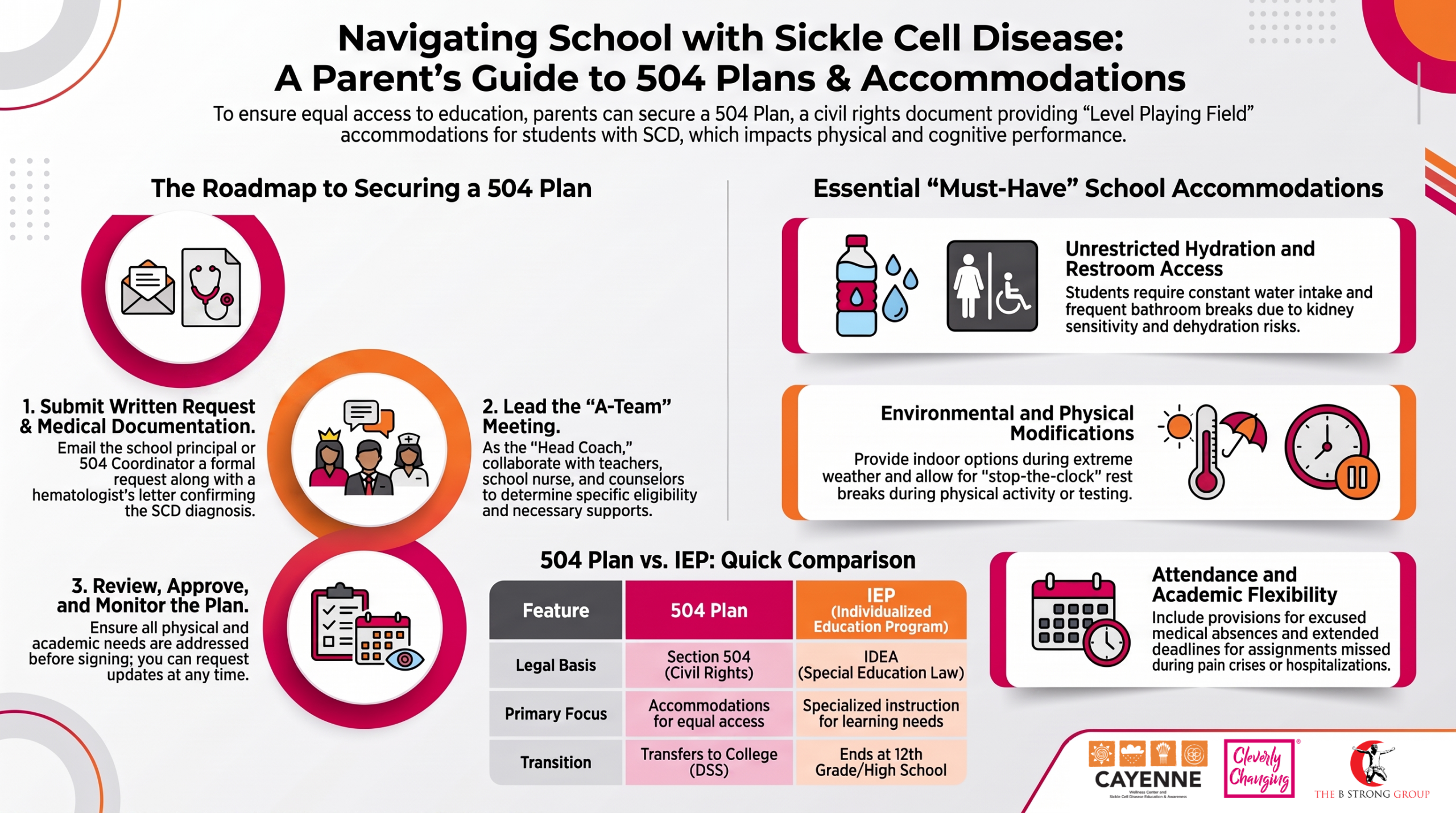
One of the biggest changes families should understand is that an IEP does not simply transfer to college. The Individuals with Disabilities Education Act, or IDEA, and its IEP requirements apply to elementary and secondary education, not postsecondary schools.
Students with disabilities may still qualify for protections and academic adjustments under Section 504 of the Rehabilitation Act and the Americans with Disabilities Act. However, in college, the student generally takes a much more active role in requesting accommodations, providing documentation, communicating with the disability services office, and advocating for their needs.
Families can learn more from the U.S. Department of Education: Students With Disabilities Preparing for Postsecondary Education: Know Your Rights and Responsibilities .
5 Documents College-Bound Families Should Discuss
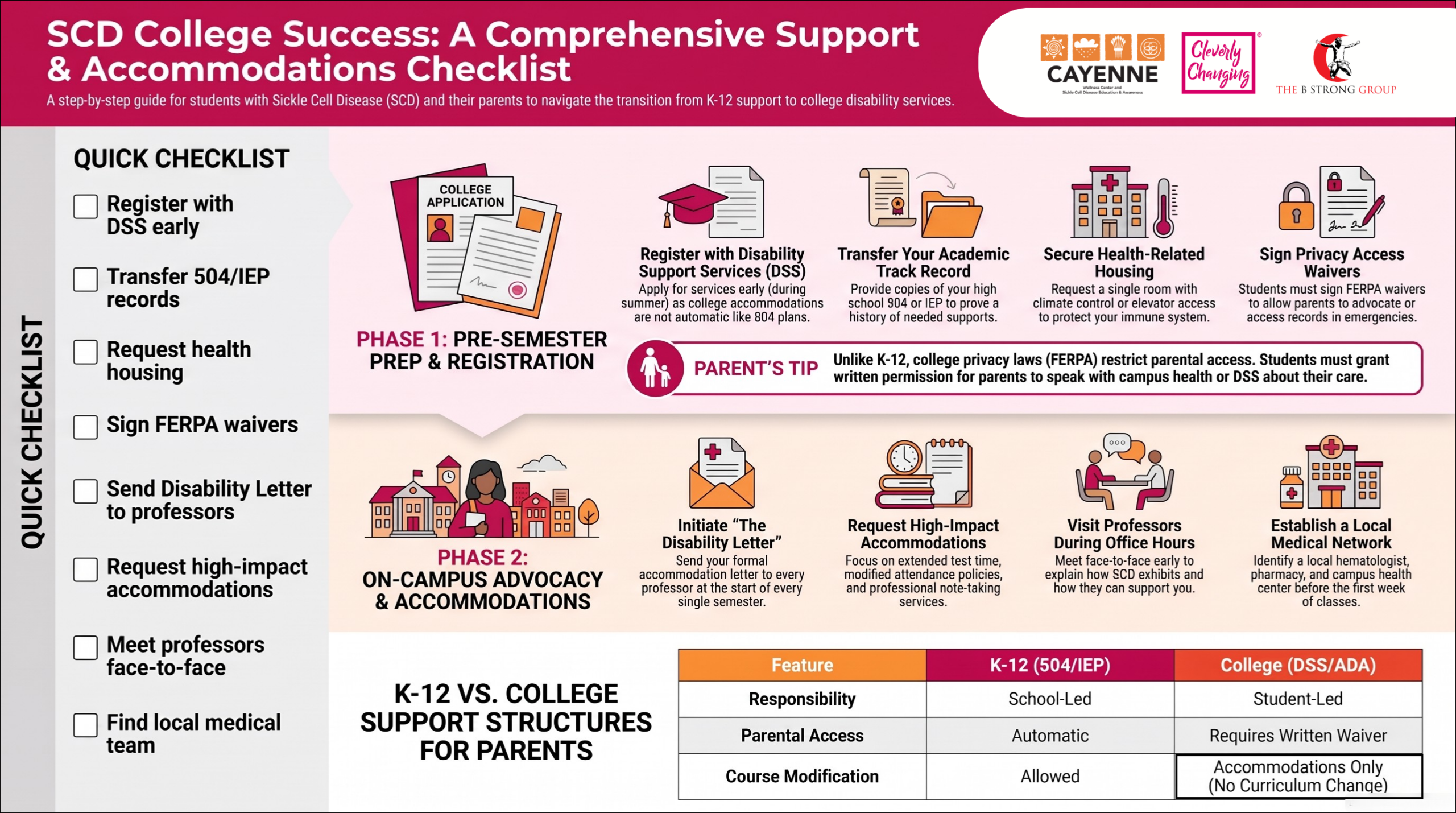
Every family and every student's situation is different. These documents are not about taking independence away from a young adult. Instead, they give students an opportunity to decide in advance who may receive information or assist them when needed.
1. FERPA Authorization or Consent
FERPA stands for the Family Educational Rights and Privacy Act. Parents may be accustomed to having direct access to school records while their child is in elementary or secondary school. That changes when FERPA rights transfer to the student.
At the postsecondary level, the student controls access to most education records. A student may provide written consent allowing the college to disclose specified education information to a parent, caregiver, or another trusted person.
Many colleges have their own FERPA authorization form or online process, so students should begin by checking with their college registrar or student records office.
Official resource:
U.S. Department of Education Model FERPA Consent Form for Postsecondary Students
Students and families can also review: What Is FERPA?
2. HIPAA Authorization
HIPAA stands for the Health Insurance Portability and Accountability Act. Once a student is an adult, a parent does not automatically have unrestricted access to the student's protected health information simply because the parent provides insurance coverage, pays medical bills, or has always coordinated the student's care.
A HIPAA authorization allows the student to specify what protected health information may be shared and with whom. For a young adult living with sickle cell disease or another chronic medical condition, families may want to discuss whether the student would like a parent, caregiver, or other trusted person to be authorized to receive certain medical information.
Because hospitals, medical practices, and health systems frequently use their own authorization forms, students should ask their healthcare providers which form they prefer.
Federal HIPAA authorization information:
U.S. Department of Health and Human Services: HIPAA Authorizations
Example federal authorization form:
HHS/Indian Health Service Authorization for Use or Disclosure of Protected Health Information
Note: The HHS/IHS form is provided as an example. A student's own physician, hospital, health system, or insurer may require its own HIPAA authorization form.
3. Durable Power of Attorney
A power of attorney is a legal document through which an adult may authorize another person to handle certain financial, legal, property, banking, insurance, or other matters on their behalf.
A power of attorney can be written broadly or narrowly depending on the student's wishes. For example, a college student might decide that a trusted parent or family member should be able to assist with certain financial or administrative matters if the student becomes unable to handle them.
Power of attorney laws and forms vary by state. Families should use the form that applies in their state and consider consulting an attorney before signing one.
California resource:
California Courts: Power of Attorney for Finances and Property
Families outside California should search the official court, attorney general, or state bar website for the state in which the student resides.
4. Healthcare Proxy or Advance Healthcare Directive
A healthcare proxy, sometimes called a healthcare power of attorney or healthcare agent designation, allows an adult to choose someone to make healthcare decisions if the adult becomes unable to make or communicate those decisions.
This is different from a HIPAA authorization. A HIPAA authorization primarily addresses access to protected medical information. A healthcare proxy addresses who may make healthcare decisions when the patient cannot do so.
For students living with sickle cell disease, it may be especially helpful to have conversations in advance about who the student trusts to speak for them during a serious medical emergency.
California resource:
California Department of Justice: Advance Care Planning and Advance Healthcare Directives
Students attending college outside California should review the requirements for the state where they live or attend school, because advance directive laws and forms can differ from state to state.
5. Living Will
A living will is an advance-care document in which a person records preferences about medical treatment if they later become unable to communicate those wishes.
Depending on the state, the living-will provisions and healthcare-agent designation may be combined into a single Advance Healthcare Directive.
California advance-care resource:
California Department of Justice: Advance Care Planning
What About a Living Trust?
A living trust is not the same as a living will. A living will concerns healthcare wishes. A living trust is primarily an estate-planning tool used to manage property and assets.
Most families do not need to create a living trust simply because a student is beginning college. However, a student who owns significant property, has complex financial circumstances, receives certain benefits, or has other estate-planning needs may want to speak with a qualified attorney.
California estate-planning information:
California Courts: Wills, Estates, Probate and Legal Documents
A College Transition Checklist for Families
In addition to discussing the documents above, students with sickle cell disease and their families may want to prepare a college health and accommodations folder containing:
- A copy of the student's current 504 Plan or IEP for historical reference
- Recent medical documentation supporting accommodation requests
- Contact information for the college disability or accessibility services office
- Health insurance cards and prescription information
- A current medication list
- Names and contact information for hematologists and other specialists
- The location of the nearest hospital and emergency department
- A sickle cell disease emergency care plan, when applicable
- FERPA authorization, if the student chooses to complete one
- HIPAA authorization, if the student chooses to complete one
- Advance healthcare directive or healthcare proxy, if appropriate
- Power of attorney documents, if appropriate
Help Students Build Their Own Advocacy Skills
College is an important shift from parent-led advocacy toward student-led self-advocacy. Before the first semester begins, encourage students to practice explaining their diagnosis, identifying the accommodations they need, communicating with professors, contacting disability services, scheduling medical appointments, refilling medications, and knowing when to ask for help.
Parents and caregivers still matter enormously. The role simply begins to change. Instead of always speaking for the student, families can help young adults develop the confidence and knowledge to speak for themselves while keeping trusted support available when it is truly needed.
Learn More About 504 and IEP Plans
Cayenne Wellness Center continues to provide education and practical resources for families navigating sickle cell disease in school. Understanding accommodations early can help students, caregivers, educators, and advocates work together to create safer and more supportive learning environments.
For additional information about the transition to college, visit the U.S. Department of Education's guide for students with disabilities preparing for postsecondary education .
Important: This article is provided for educational purposes only and is not legal or medical advice. Laws and document requirements vary by state and individual circumstances. Families should consult the student's college, healthcare providers, and a qualified attorney when determining which documents are appropriate.